Planetary science
Planet Guide
Reference data for every major world in the Solar System, drawn from NASA's planetary fact sheets. Explore them in 3D in the Cosmic Atlas.

The Sun and planets
- SunA G-type main-sequence star holding 99.86% of the Solar System's mass.
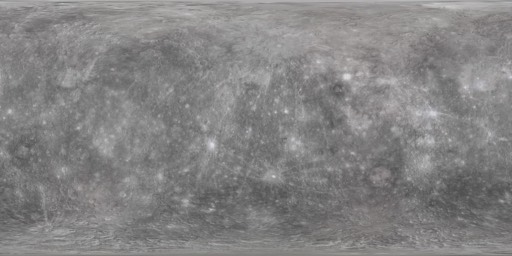
- MercuryThe smallest planet and the closest to the Sun, with a giant iron core.
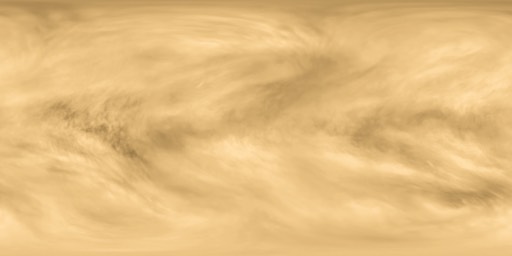
- VenusEarth-sized, wrapped in crushing carbon dioxide and sulfuric-acid cloud.
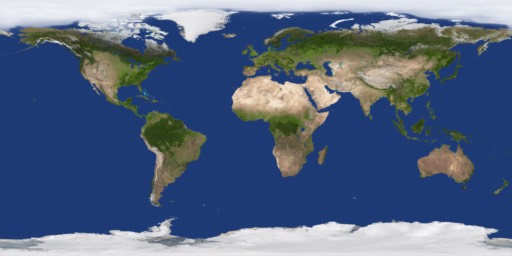
- EarthThe only world known to host life, with liquid water oceans and plate tectonics.
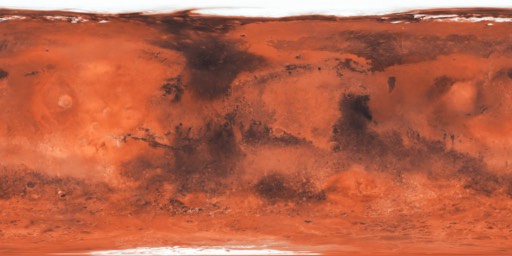
- MarsA cold desert world with the largest volcano and canyon system known.
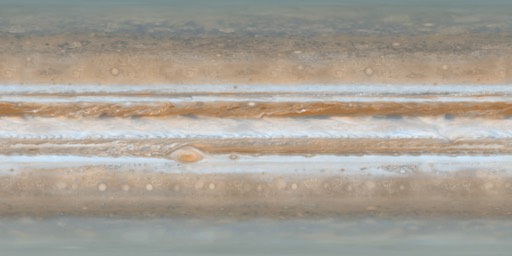
- JupiterThe giant of the Solar System, more than twice as massive as all other planets combined.
- SaturnThe ringed gas giant, less dense than water, with hundreds of moons.
- UranusAn ice giant tipped on its side, orbiting with its poles toward the Sun.
- NeptuneThe windiest world, predicted by mathematics before it was ever seen.


Dwarf planets
Major moons
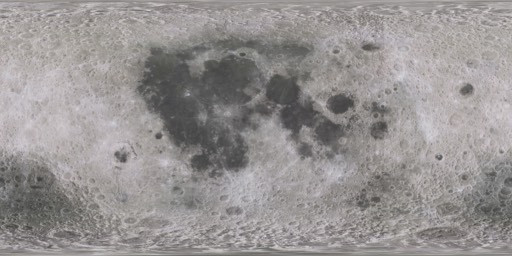
- MoonEarth's only natural satellite and the only other world humans have walked on.
- IoThe most volcanically active body known, heated by tidal flexing.
- EuropaAn ice-covered moon hiding a global salty ocean.
- GanymedeThe largest moon in the Solar System, bigger than Mercury.
- CallistoOne of the most heavily cratered surfaces in the Solar System.
- TitanA hazy moon with methane rain, rivers and seas.
- EnceladusA bright icy moon venting a subsurface ocean into space.
- TritonNeptune's largest moon, orbiting backwards with active nitrogen geysers.
Compare the planets
| Body | Diameter (km) | Mass (kg) | Gravity (m/s²) | Mean temp (°C) | Day (h) | Year (days) | Distance (M km) | Moons |
|---|---|---|---|---|---|---|---|---|
| Sun | 1,391,400 | 1.99 × 10^30 | 274 | 5499 | 609.12 | — | — | — |
| Mercury | 4,879.4 | 3.3 × 10^23 | 3.7 | 167 | 1,407.6 | 88 | 57.9 | 0 |
| Venus | 12,104 | 4.87 × 10^24 | 8.9 | 464 | -5,832.5 | 224.7 | 108.2 | 0 |
| Earth | 12,742 | 5.97 × 10^24 | 9.8 | 15 | 23.9 | 365.2 | 149.6 | 1 |
| Mars | 6,779 | 6.42 × 10^23 | 3.7 | -65 | 24.6 | 687 | 228 | 2 |
| Ceres | 939.4 | 9.38 × 10^20 | 0.28 | -105 | 9.07 | 1,682 | 414 | 0 |
| Jupiter | 139,820 | 1.9 × 10^27 | 23.1 | -110 | 9.9 | 4,331 | 778.5 | 101 |
| Saturn | 116,460 | 5.68 × 10^26 | 9 | -140 | 10.7 | 10,747 | 1,432 | 285 |
| Uranus | 50,724 | 8.68 × 10^25 | 8.7 | -195 | -17.2 | 30,589 | 2,867 | 29 |
| Neptune | 49,244 | 1.02 × 10^26 | 11 | -200 | 16.1 | 59,800 | 4,515 | 16 |
| Pluto | 2,376 | 1.3 × 10^22 | 0.62 | -225 | -153.3 | 90,560 | 5,906.4 | 5 |
| Eris | 2,326 | 1.66 × 10^22 | 0.82 | -231 | 378.9 | 203,830 | 10,125 | 1 |
Negative day lengths mean retrograde rotation. Giant-planet temperatures are at the 1-bar level. Moon counts as reported after the IAU Minor Planet Center announcements of March 2026. Counts change as new discoveries are confirmed. Source: NASA Goddard Planetary Fact Sheets.